
What is the difference between cosmetic and functional blepharoplasty?
Blepharoplasty, or eyelid surgery, is one of the most effective procedures for rejuvenating the eye area. In its cosmetic form, it can refresh the eyes and create a brighter, more rested appearance without changing the natural character of the face. However, blepharoplasty is not always performed solely for aesthetic reasons. In some patients, eyelid surgery is undertaken for a functional purpose – most commonly to improve vision or restore the normal support and position of the eyelids.
Functional blepharoplasty
Functional blepharoplasty is most commonly performed on the upper eyelids, where excess skin or drooping tissue can hang over the lash line and begin to interfere with the upper field of vision. This may develop as part of the natural ageing process, or it may be related to inherited anatomy, brow descent, or eyelid weakness.
In these cases, the aim of surgery is not simply to make the eyelids look better, but to restore a clearer visual field, reduce heaviness, and improve eyelid function. Many patients also notice that their eyes feel less tired once the excess weight of the upper lid has been relieved.
Functional concerns can also affect the lower eyelid, although this is less often described as a ‘functional blepharoplasty’ in the traditional sense. Some patients develop lower lid laxity, malposition, or retraction, which may lead to eye irritation, watering, dryness, or an unnatural appearance. In these situations, surgery may involve lower eyelid reconstruction or support procedures, designed not only to improve appearance but also to restore proper eyelid position and protect the eye’s surface.
How do I know if I’m a candidate for functional blepharoplasty?
Mr Juling Ong can assess whether functional eyelid surgery is appropriate by carefully examining the eyelids, brow position, skin excess, and eyelid support. In the case of the upper lids, this is often combined with a visual field assessment to determine whether the eyelid tissue is significantly obstructing vision.
For the lower lids, assessment focuses on eyelid tone, position, support, and the relationship between the lower lid and the eyeball. This helps determine whether a patient would benefit from reconstructive lower lid tightening, repositioning, or support, often in combination with cosmetic refinement.
Cosmetic blepharoplasty
Cosmetic blepharoplasty is performed when a patient wishes to improve the appearance of the eye area and achieve a more youthful, rested, and refreshed look. It may be performed on the upper eyelids, the lower eyelids, or both together.
Aesthetic improvement of the upper lid
Upper eyelid blepharoplasty treats the area between the lash line and the brow. It is commonly used to address:
- heavy or hooded upper eyelids
- loose or crepey skin
- a tired or aged appearance
- loss of definition in the upper eyelid crease
- bulging of the fat pads
The goal is to create a smoother, lighter upper eyelid contour while preserving a natural appearance.
Aesthetic improvement of the lower lid
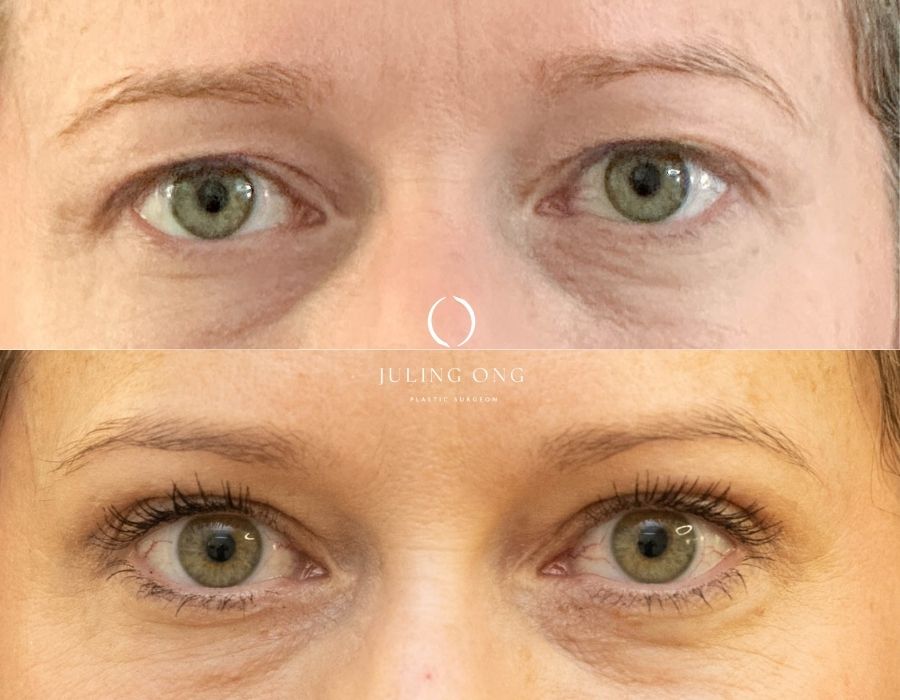
Lower eyelid blepharoplasty focuses on the area beneath the eye and is used to treat:
- puffiness or eye bags
- excess lower eyelid skin
- wrinkles or crepiness
- hollowing of the tear trough or an uneven lid–cheek junction
Modern lower eyelid surgery is not simply about removing tissue. It is often about repositioning fat, preserving volume, and reconstructing lower lid support to create a smoother, more elegant transition from the eyelid to the cheek. In the right patient, this produces a result that looks fresher and more refined, while avoiding an over-operated or hollow appearance.
Does the procedure differ between cosmetic and functional blepharoplasty?
The basic surgical principles overlap, but the emphasis differs depending on whether the priority is function, aesthetics, or both.
For an upper blepharoplasty, Mr Ong places the incision within the natural eyelid crease so that the scar heals discreetly. Excess skin is removed, and where appropriate, underlying muscle or protruding fat may also be adjusted. In functional cases, the priority is to remove the tissue obstructing vision while maintaining a natural contour. In cosmetic cases, the focus is on restoring a more youthful and refreshed appearance without making the eyes look unnatural or overly hollow.
For a lower blepharoplasty, the approach depends on the patient’s anatomy. An incision may be placed just beneath the lash line, or in selected patients, on the inside of the lower eyelid using a transconjunctival approach. Some patients benefit from both a transconjunctival approach as well as a small resection of skin below the lash line. Younger patients with prominent eye bags but good skin tone may not need skin removal at all, and may benefit from internal fat repositioning or reduction alone.
Importantly, lower eyelid surgery often requires attention to structural support and reconstruction as well as aesthetic improvement.
If the lower lid is lax or at risk of pulling downwards, supportive procedures such as tightening, suspension, or canthal support may be combined with blepharoplasty. This helps maintain the correct lid position, protect the eye, and achieve a more harmonious aesthetic result.
Can I have both functional and cosmetic blepharoplasty?
Yes. Many patients have concerns that are both functional and aesthetic.
For example, a patient with heavy upper eyelids may have genuine visual obstruction, while also feeling that the eyes look tired or aged. In these cases, functional upper eyelid surgery can improve vision and enhance appearance.
Similarly, some patients may wish to combine functional upper eyelid surgery with cosmetic lower eyelid blepharoplasty to address under-eye bags, skin excess, or lower lid ageing. Where needed, lower lid reconstruction or support can be incorporated to improve both comfort and appearance.
The key is a careful assessment and an individualised surgical plan. Around the eyes, successful blepharoplasty is not simply about removing skin, muscle or fat – it is about addressing symptoms, balancing vision, eyelid support, symmetry, contour, and natural aesthetics.
Find out more
If you would like to know whether blepharoplasty is appropriate for you — whether for functional reasons, cosmetic improvement, or a combination of both – Mr Juling Ong can advise on the most suitable approach following a detailed consultation.
For more information or to arrange an appointment, please contact the clinic.


