
Facial implants vs fat grafting: two approaches to restoring facial volume
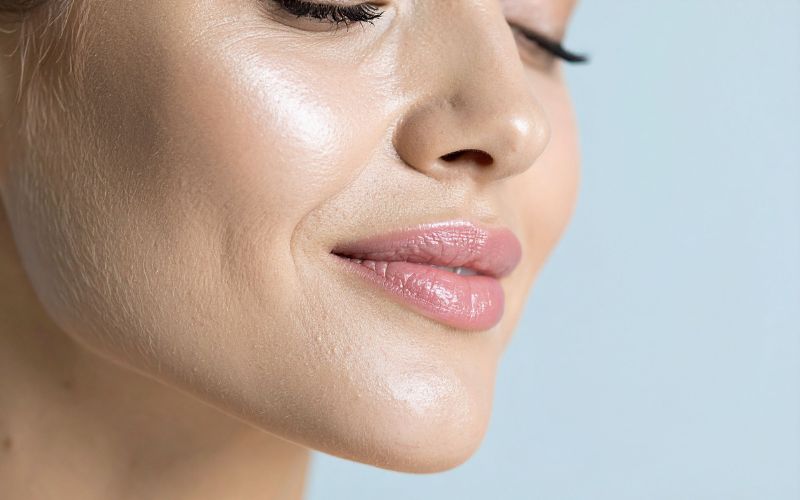
If you have been considering cheek or jaw augmentation, you may have come across two surgical options: facial implants and facial fat grafting. Both are well-established procedures that can address volume loss, reshape facial contours, and restore a more youthful or defined appearance.
The best approach depends on the individual – what they hope to achieve, their anatomy, and the amount of change they seek.
Here we explore both options in detail, comparing their longevity, recovery, candidacy and the quality of results they can produce.
Understanding the two approaches
Facial fat grafting involves harvesting a small amount of fat from a donor site on your own body – typically the abdomen, flanks, or inner thighs – purifying it and injecting it into the areas of the face where volume is needed.
It is a minimally invasive procedure that uses your own biological tissue, making rejection impossible. Because the fat is autologous, which means from your own body, it integrates naturally with surrounding tissues and can also have regenerative benefits, with published research suggesting that adipose-derived stem cells within the graft contribute to improvements in skin quality.
Facial implants, by contrast, use pre-formed or custom-made biocompatible materials – most commonly medical-grade silicone or porous polyethylene – to augment the underlying bony architecture of the face. They are fixed to bone using small titanium screws and are placed via discreet incisions, usually inside the mouth, leaving no external scarring. Implants are most commonly used for cheek and jaw augmentation, and can produce immediate, precise and permanent structural changes.
Longevity: what does the evidence say?
Longevity is one of the most frequently discussed differences between these two procedures. Facial implants offer a truly permanent result: once in position and healed, they remain stable for life and do not change with normal ageing or weight fluctuation. This predictability is a genuine advantage for patients seeking structural definition that will last indefinitely.
Fat grafting is often described as semi-permanent, but this requires some nuance. Not all the transferred fat survives the initial graft – a proportion is reabsorbed in the weeks following surgery as the new blood supply is established.
Published research in Plastic and Reconstructive Surgery established that fat, which successfully integrates with surrounding tissue, behaves as a permanent addition.
However, a systematic review published in the Journal of Plastic, Reconstructive and Aesthetic Surgery found that retained graft volume varies considerably, and patients should be counselled that a secondary fat grafting session may be needed to achieve the desired result. A useful rule of thumb is to expect that around one-third of the grafted fat may not survive, though this figure varies significantly depending on technique and individual physiology.
It is also worth noting that fat, unlike an implant, will continue to age naturally alongside the rest of your face. Many patients find this a positive quality, as the result evolves gradually rather than remaining fixed as surrounding tissues change over time.
Recovery after facial sculpting surgery
Both procedures are typically performed as day cases, and most patients return to work within a few days. That said, there are some differences in what to expect.
With facial fat grafting, bruising and swelling are common in both the donor and recipient areas and generally settle within one to three weeks. There is often a period of apparent over-correction immediately after surgery, as the face can look fuller than the final result. This resolves as the non-viable fat is reabsorbed over several weeks. Final results typically become apparent at around three months. One advantage of fat grafting is that the procedure involves no foreign material; there is no risk of implant-related complications.
Facial implant surgery has a comparable recovery timeline, with swelling subsiding over 2 to 6 weeks. Results are immediately visible and highly consistent. There is a small risk of infection in the early post-operative period, which is managed with a short course of antibiotics.
A 2023 comparative study examining malar augmentation found that patient satisfaction was high across both implant and fat grafting groups, with the implant cohort reporting marginally higher satisfaction and a low but slightly elevated complication rate.
Candidacy: which approach suits which patient?
The right choice depends on several clinical factors.
Facial implants are particularly well-suited to patients who require significant structural augmentation, such as a recessed chin, flat cheekbones with minimal soft tissue, or facial asymmetry linked to underlying bony deficiency.
Fat grafting is often the preferred approach for patients whose primary concern is age-related volume loss rather than structural deficiency; those who have lost the soft-tissue fullness that characterises a youthful face, particularly in the cheeks, midface, and jawline.
Because fat can be placed in precise small aliquots across multiple compartments simultaneously, it is well-suited to patients seeking an overall softening and volumisation rather than a single focal change. Fat grafting to the cheeks typically produces a softer improvement in malar contour than implants, with the additional benefit of correcting subtle asymmetries across multiple facial zones in a single session.
Achieving natural-looking results
When performed by an experienced surgeon, both techniques can produce highly natural outcomes. With fat grafting, the softness of the result is often cited as a key advantage as it integrates seamlessly with surrounding tissues and moves naturally with the face. There is no palpable foreign body, and the gradual nature of the final result can make the change appear to others as though you simply look well-rested or refreshed. The regenerative properties of the graft may also improve skin texture and quality in the treated area over time.
Facial implants, when appropriately sized and correctly positioned, can also look entirely natural. The key is careful pre-operative planning: selecting the right implant profile, volume, and placement to complement the patient’s existing facial structure rather than imposing a change that looks incongruous. In skilled hands, cheek implants can restore the high malar projection associated with youth while simultaneously reducing the appearance of under-eye hollowing and nasolabial folds.
In some cases, combining both techniques produces the most balanced result, for example, using an implant to restore structural projection and fat grafting to soften the transitions and add overall fullness.
Making the right decision for you
The decision should be guided by your anatomy, your aesthetic goals, your tolerance for the respective recovery processes, and your preference for a natural versus a more defined structural outcome.
If you are considering either procedure, the next step is to arrange a consultation so we can discuss your concerns in detail, assess your facial anatomy, and explore which approach – or combination of approaches – is most likely to achieve the outcome you are looking for. Mr Juling Ong offers both facial implants and facial fat grafting and will always recommend what he believes to be most appropriate for you as an individual.
To arrange a consultation with Mr Juling Ong, please call 020 7927 6528 or email info@julingong.com.


